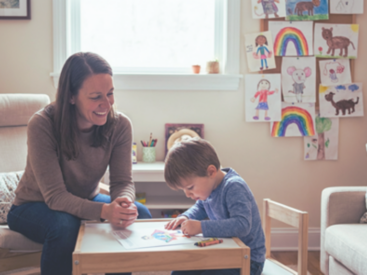

Working with kids means working with BIG feelings, and the calm down corner posters on this list were designed to help you do just that. Read on to learn more about how to create a soothing calm down corner in your therapist office with these posters.
*Disclosure: This post contains affiliate links, including links to Amazon, and as an Amazon Associate, I earn from qualifying purchases. I only recommend resources, products, and services that I adore and find to be useful. If you happen to make a purchase using one of my affiliate links, I will earn a small commission, at no additional cost to you. Read more about our policies here.
The Magic of the Calm Down Corner
If you work with kids, then you already know how key it can be to provide them with opportunities to build their emotional regulation skills. A well-designed, cozy calm down corner can be a game changer for your child therapy sessions.
And I’m not talking about a space to send a child when they “act out”. This isn’t your grandma’s “go stand in the corner” intervention. Quite the opposite in fact.
The kind of calm down corner I’m referring to is one where feelings are allowed. It’s a space where kids get to learn how to identify the feelings and sensations in their bodies. A calming corner to self-soothe and to regulate their emotions.
And the calm down corner posters on this list are the perfect printables to enhance the calm down corner in your therapy office.
This isn’t your grandma’s “go stand in the corner” intervention. Quite the opposite in fact.
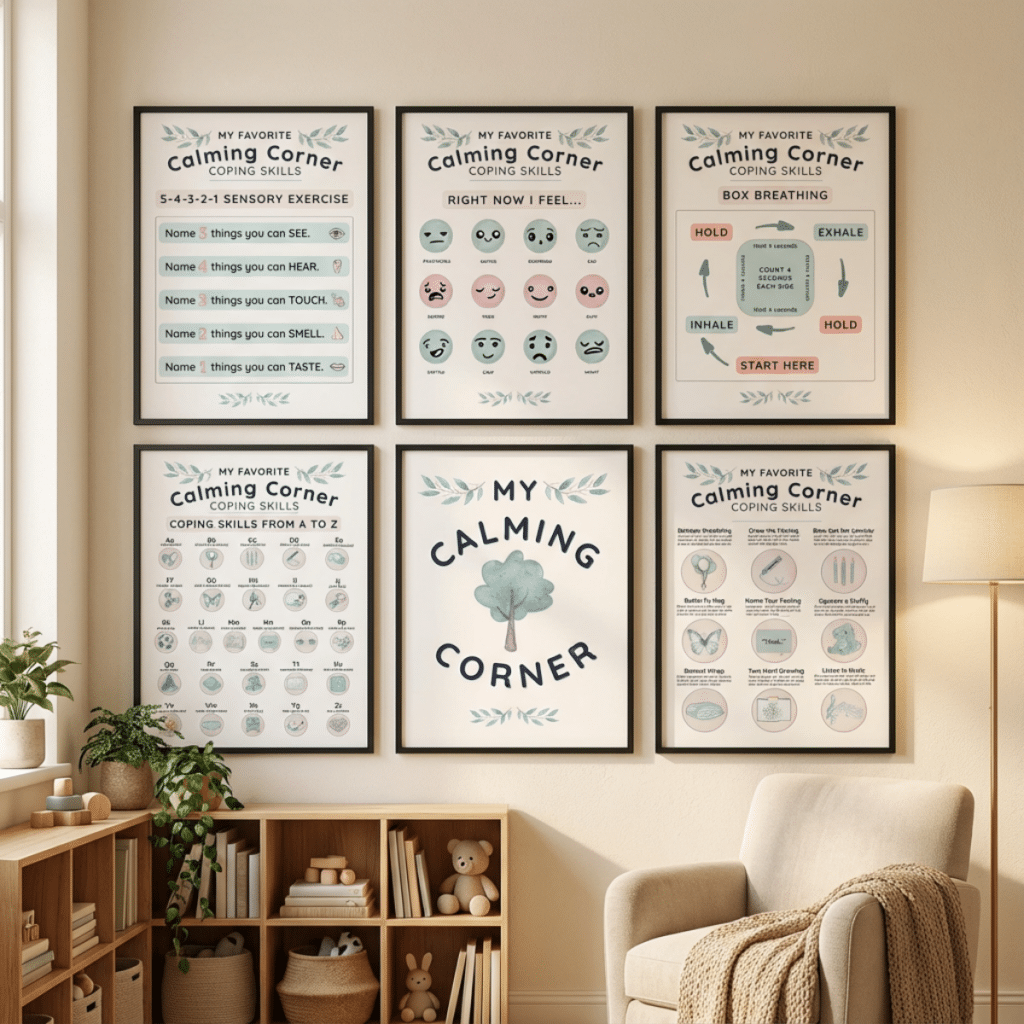
Calm Down Corner Posters for Your Office
Creating a calm down corner in your therapy office, classroom, or SEL space is one of the most effective ways to help kids practice emotional regulation in real time.
Children often need structure, predictability, and visual guidance to understand what’s happening in their bodies—and what to do next. That’s where therapeutic calm down corner posters become especially powerful.
Visual Aids for Skill-Building
These visuals help kids recognize emotions, ground their bodies, and choose coping tools independently, making them invaluable for therapists, school counselors, emotional support teachers, and behavior specialists.
Below are a collection of essential poster types to include in your calming space, along with tips for using them and information about the professionally designed versions available in the Creative Therapy Ideas Etsy shop.
Why Calm Down Corner Posters Matter
Kids don’t always have the language—or the regulation skills—to express what they’re experiencing.
Calm down corner posters offer the immediate support they need by:
- Giving kids visual cues they can follow without adult prompting
- Supporting emotional literacy and self-awareness
- Reinforcing SEL and therapy skills through repetition
- Helping kids navigate dysregulation, transitions, sensory overload, and frustration
- Creating predictability and structure within the calming space
When used intentionally, these posters turn a calm down corner into a meaningful therapeutic intervention.
The Best Calm Down Corner Poster Printables for Your Therapy Office
These are the foundational visuals every professional working with kids should consider for their calming space.
1. Feelings Identification Posters
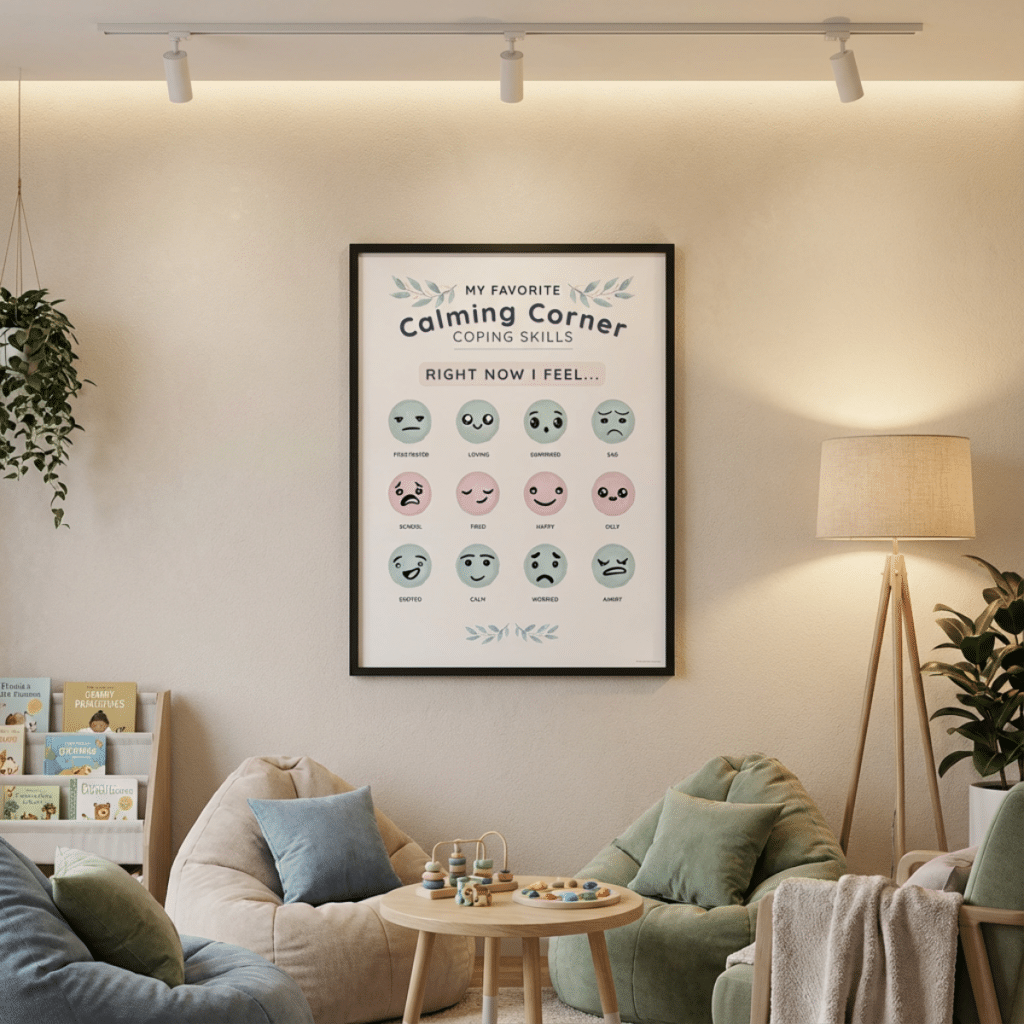
Feelings posters help kids name and recognize emotions—a crucial first step in emotional regulation. They also help kids learn that feelings are normal, temporary, and actually helpful.
Feelings identification posters provide learning opportunities for kids to figure out how different emotions feel in their bodies, and what facial expressions are associated with each feeling.
Examples include:
- Emotion charts with expressive faces
- Simple mood check-ins
- Color-coded emotion wheels
- Emotion thermometers
I designed the Feelings Identification poster below to support kids in identifying and expressing their feelings when dysregulated. The poster features clear, friendly visuals that help kids tune into how they’re feeling before selecting a coping strategy.
2. Self-Esteem Building Posters
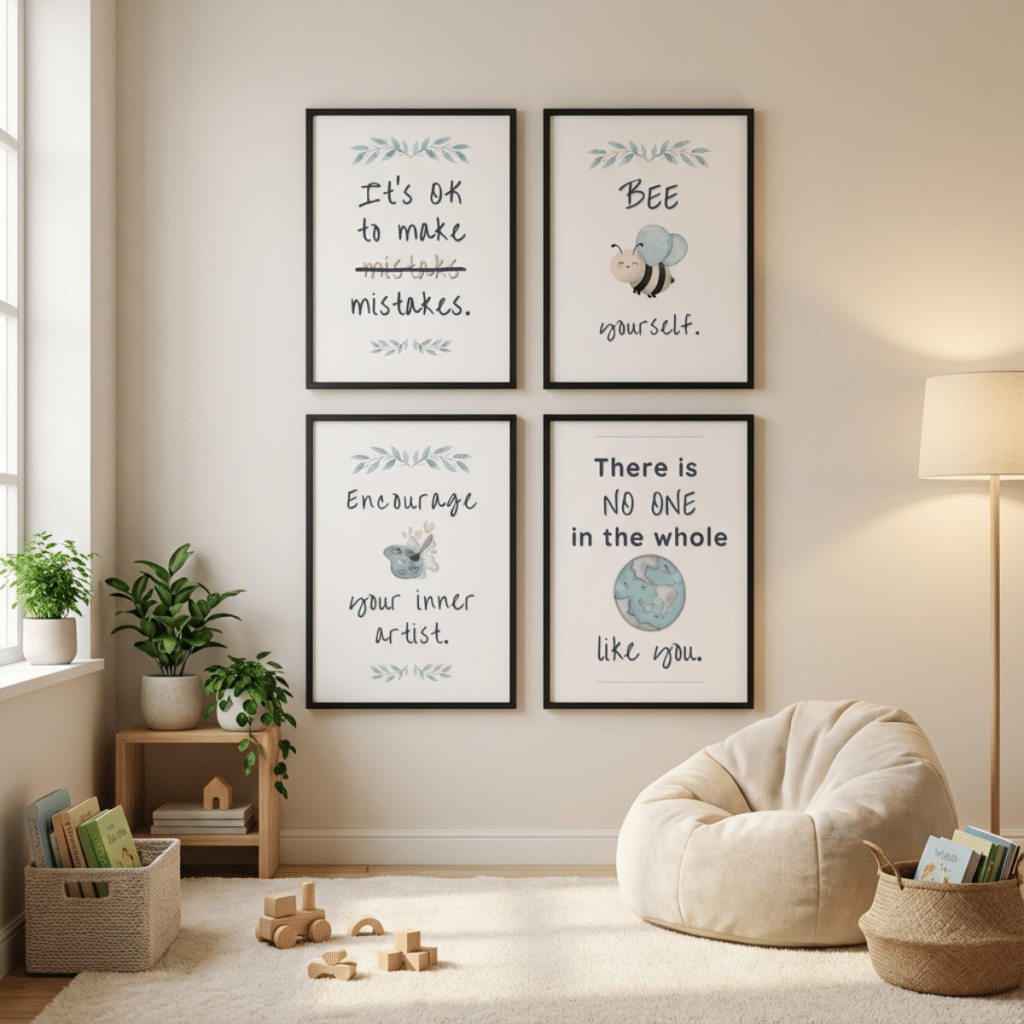
For many kids, dysregulation can happen when a wound gets poked, especially when those wounds relate to low self-esteem. Offering a calm environment where kids feel safe, seen, and accepted supports them in building positive self-esteem. And the posters pictured below were designed to help that process along.
Pair these self-esteem posters with grounding visuals to help kids connect body sensations with regulating actions.
3. Grounding Skills Posters
Grounding techniques help kids return to the present moment when they feel overwhelmed or overstimulated.
Popular grounding posters include:
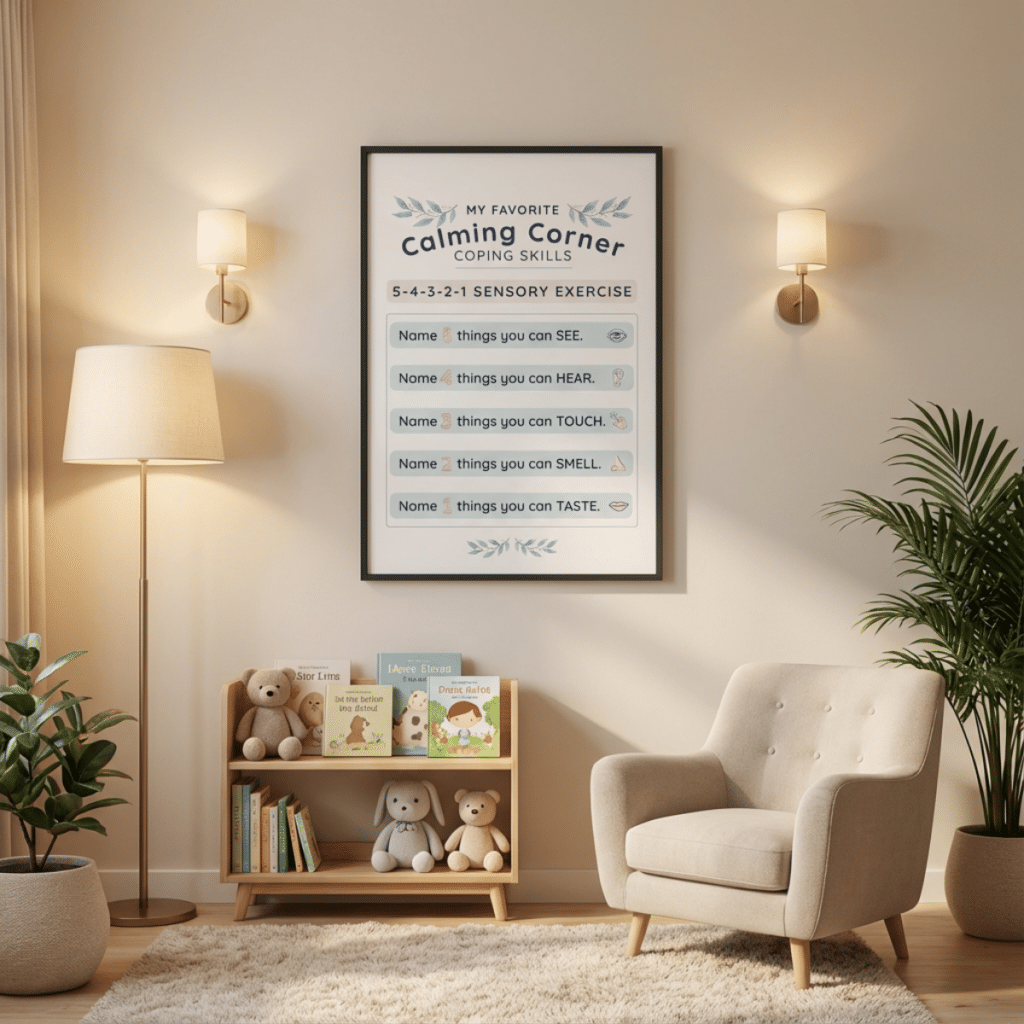
- The 5-4-3-2-1 grounding method
- Sensory noticing prompts “Things that are blue”
- Simple grounding scripts like “I am in the office” or “I’m sitting on the floor”
The grounding technique poster below offers a step-by-step grounding strategy based in the 5 senses. I designed it specifically for therapy offices and classroom calm down spaces.
4. Breathing Technique Posters
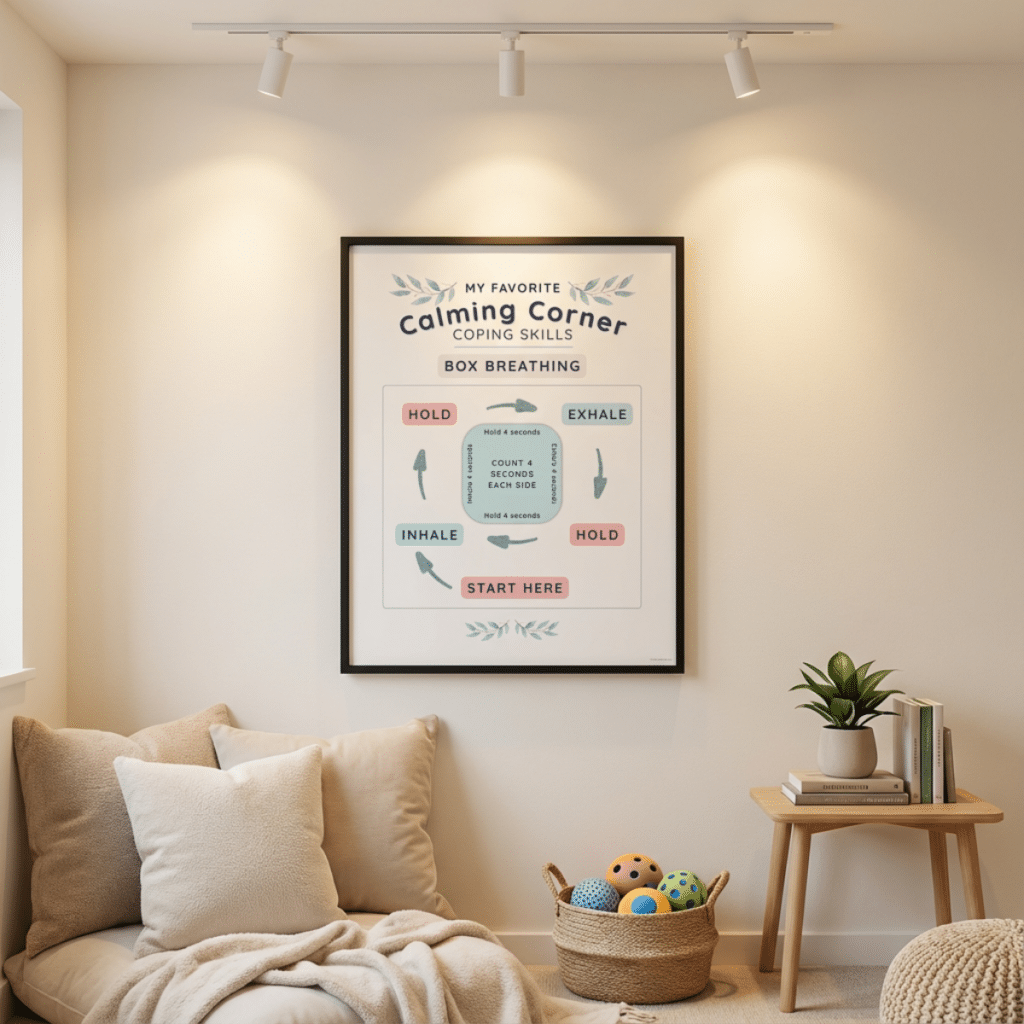
Visual aids centered around breath work can help kids regulate their nervous systems in seconds. Breathing exercises like box breathing (pictured below) help the brain send the message to the nervous system that all is well. Breathing exercises like these offer kids a tool they can take with them anywhere they go.
Common breathing techniques posters include:
- Rainbow breathing
- Star or box breathing
- Flower-and-candle breathing
- Balloon breaths
These posters work best when placed near seating areas where children naturally go to calm their bodies.
5. Coping Skills Posters
Coping skills visual aids empower kids to make choices, something especially helpful during dysregulation. The coping skills activities on the posters below offer kids a choice in how they want to proceed. This gives them a sense of control which can soothe emotional overwhelm.
These posters feature coping skills activities like:
- Movement-based strategies
- Mindfulness options
- Creative calm-down activities
- Positive self-talk statements
- Sensory-based tools
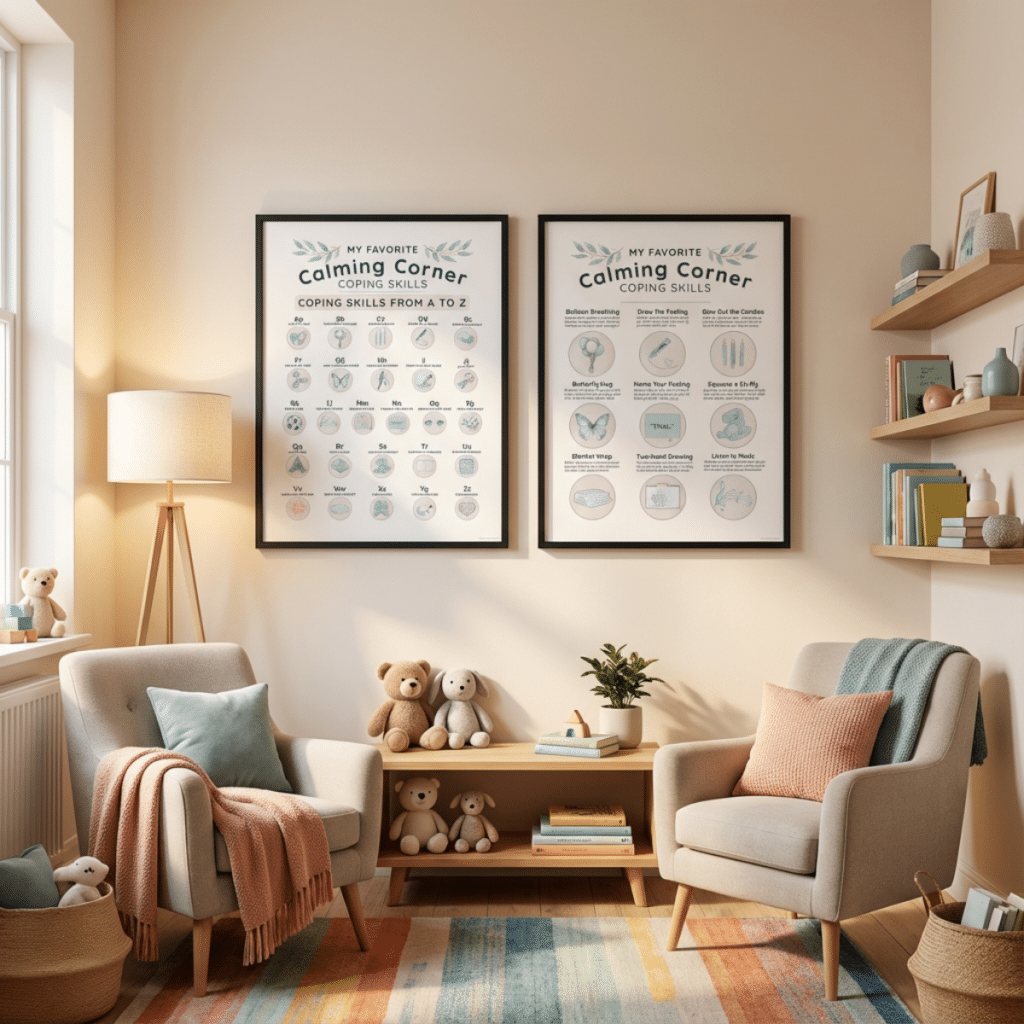
I designed these coping skills posters in a child-friendly layout with soothing imagery to help children choose their desired coping skills activity with ease.
Choose from “My Favorite Coping Skills” poster for classic and accessible emotion regulation activities, or the “Coping Skills From A to Z” poster that offers a broad range of activities to target a variety of needs based on the always familiar the alphabet.
6. Positive Affirmation Posters
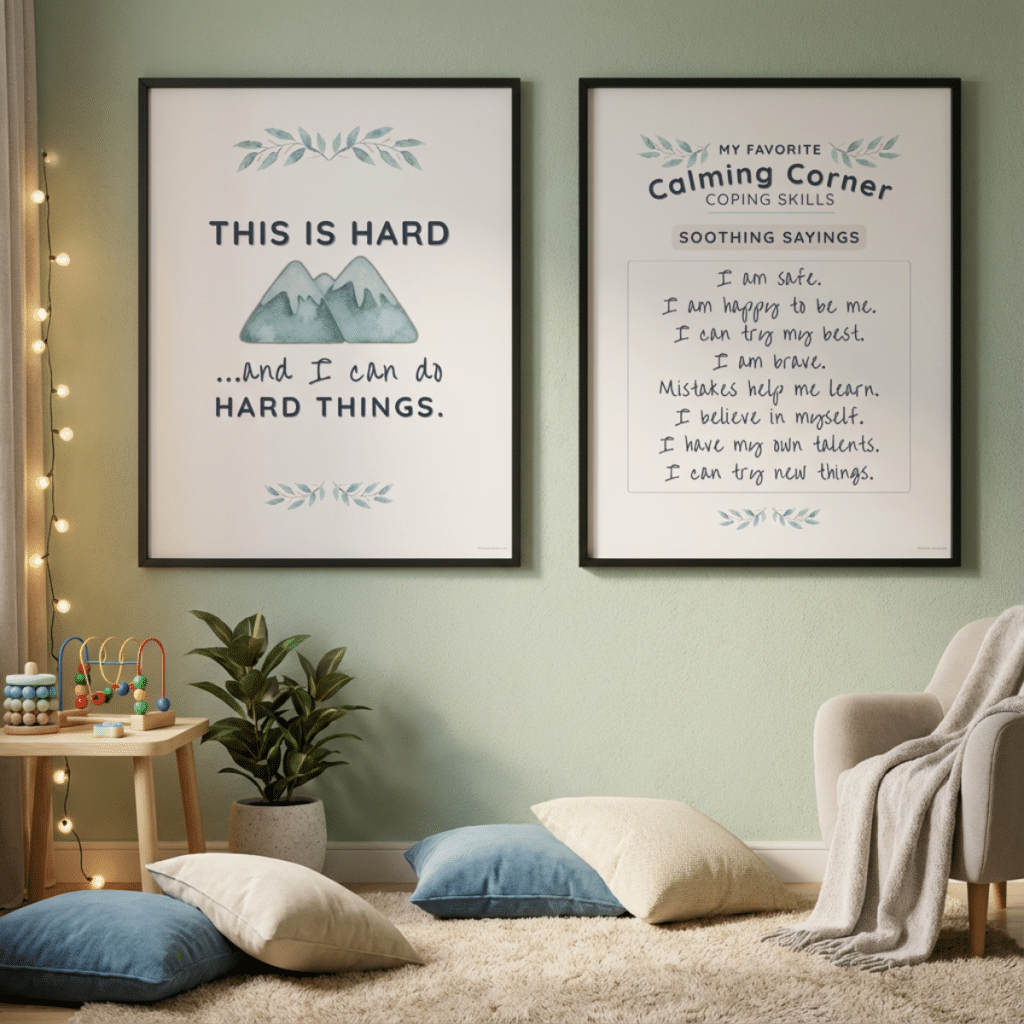
Positive affirmations have been shown to reduce anxiety and build self-esteem. Using calm down corner posters like the ones pictured below can help kids build emotional resilience and replace negative self-talk.
Popular examples include:
- “I can calm my body.”
- “My feelings are important.”
- “I am safe.”
- “I can try new things.”
- “This is hard, and I can do hard things.”
The affirmation posters below feature simple, encouraging and positive phrases that kids can understand. And I designed the posters themselves to blend seamlessly into calm, soothing spaces.
Developing a Calm Down Corner Routine
Step-by-step calming routines help kids understand exactly what to do when they enter the calm down corner.
A simple sequence might include:
- Notice your body – what sensations do you notice?
- Name the feeling – what emotions do you feel right now?
- Choose a tool – what tool or activity will help you the most right now?
- Practice it – how can you use this tool or activity to calm your body down?
- Check in with yourself – are you feeling ready to come back?
This step-by-step routine is just one suggestion. You can develop a ritual that works best for you and your calming corner space.
Tips to Create a Calm Down Corner in Your Therapy Office
- Hang Posters at Child Height: The easier they are to see, the more likely kids are to use them independently.
- Keep the Environment Visually Calm: Choose a select number of posters to feature in your calm down corner versus overwhelming the space with too many visuals.
- Pair Visuals with Sensory Tools: Match posters with a collection of sensory items. Think things like pinwheels, fidget toys, cozy squeezable/huggable items like pillows, weighted blankets, and stress toys.
- Create a Corresponding Toolkit: Have a wellness tool kit on hand with items that match the coping skills activities on the visual posters. (i.e. drawing/writing paper, art supplies, books, stuffed animals, etc.)
- Teach the Posters Regularly: Use them in therapy, SEL lessons, or morning meetings so kids learn how—and when—to use each strategy.
- Rotate Posters as Needed: Refresh visuals throughout the year to keep engagement high and skills relevant.
Posters That Boost Emotional Intelligence
A calm down corner isn’t just a cozy spot—it’s a powerful therapeutic tool.
With the right posters, kids learn to identify emotions, calm their bodies, and practice coping skills independently. Adding therapeutic calm down corner posters to your space supports the work you’re already doing and gives kids the visual guidance they need to grow in emotional awareness and resilience.
Calm down corners with posters like the ones in my bundle send messages that boost emotional intelligence. Kids can learn things like:
- It’s OK to feel overwhelmed.
- The feelings won’t hurt you.
- This feeling won’t last forever.
- You have the power to feel better.
- You are accepted, feelings and all.
Get The Calming Corner Poster Printable Bundle
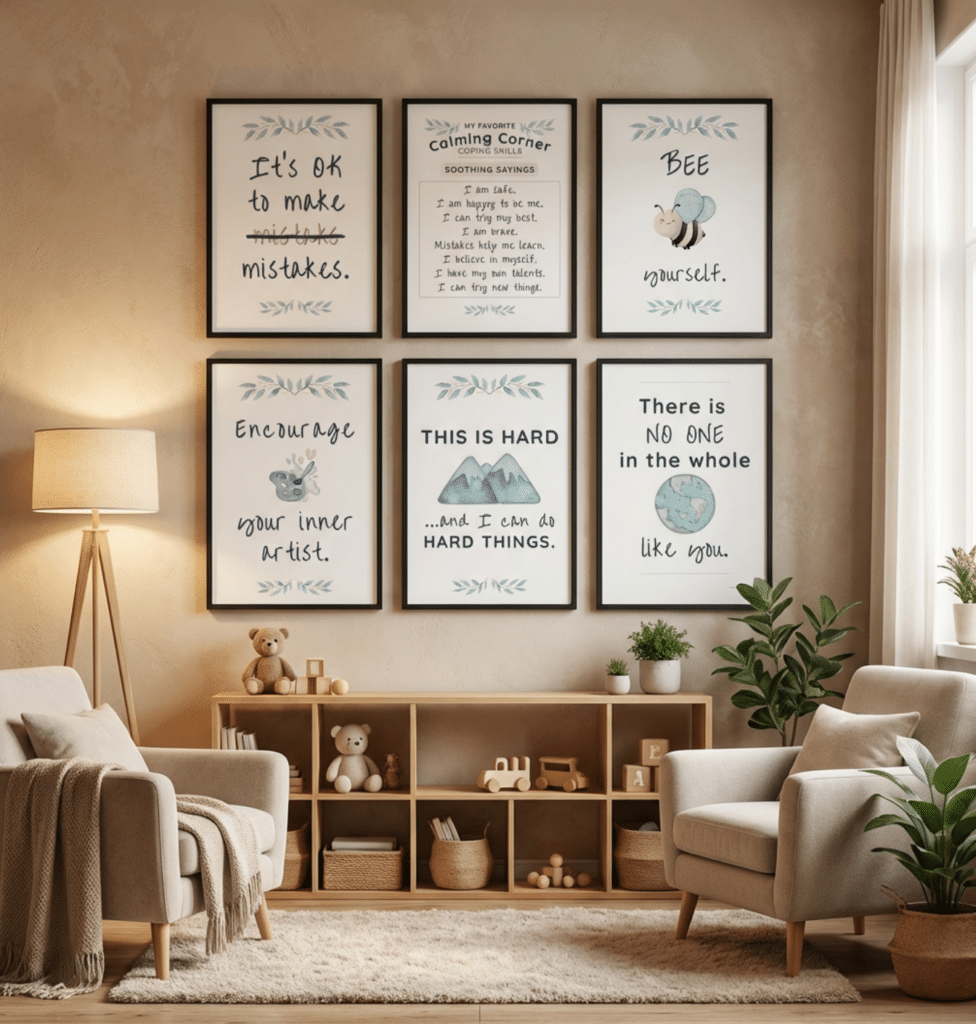
All the poster types discussed in this post (including coping skills, grounding skills, affirmations, feelings identification, etc.) are all included in the Calm Down Corner Poster Bundle (12-pack) available in my Etsy shop.
I designed the Calm Down Corner Poster Bundle specifically for:
- Therapists
- School counselors
- Special Education Teachers
- Emotional support teachers
- Behavior specialists
- SEL professionals
- Classroom teachers
- Any professional who work with kids
➡️The bundle includes high-quality (300 dpi) PNG images that print beautifully, laminate well, and help create a supportive, structured environment where kids can learn emotional regulation with confidence.
You can grab the bundle in my Etsy shop here and download the calming corner poster pack instantly!
Final Thoughts
As a therapist and a mom, I love anything that helps me support a child’s growth and development. That’s why I designed these posters.
They are based on science-backed techniques and designed to be visually soothing and easy for the brain to process.
It’s really important to me to convey the message that feelings are ALWAYS welcome in my home and in my office and these posters help me do that. I hope you will find them as helpful as I have in letting kids know that feelings are not the enemy and that they have choices when they feel overwhelmed.
Wishing you the best in your work and a calm space to practice in. 😌