

If you are a child therapist, then you know how helpful it can be to teach kids how to regulate their emotions—and it’s not always easy coming up with session activities that hit the target. The art therapy activities for kids in this post not only help with emotion regulation, but they are simple, effective, and adaptable across multiple settings.
*Disclosure: This post contains affiliate links, including links to Amazon, and as an Amazon Associate, I earn from qualifying purchases. I only recommend resources, products, and services that I adore and find to be useful. If you happen to make a purchase using one of my affiliate links, I will earn a small commission, at no additional cost to you. Read more about our policies here.
3 Art Therapy Activities for Kids to Support Emotion Regulation
In this post, I’m sharing three art therapy–informed activities that support emotion regulation, emotional awareness, and coping skills for kids.
These activities are easy to implement in in-person sessions, telehealth therapy, school counseling, or at home, and they help kids learn an essential message: emotions are information, not something to fear or avoid.
Why Art Therapy Activities Help with Emotion Regulation
Art therapy activities give children a nonverbal way to explore feelings that may be difficult to put into words. Through drawing and creative expression, kids can safely externalize big emotions, identify triggers, and experiment with coping strategies.
The art activities for kids in this post are especially helpful when working with:
- Anger and emotional outbursts
- Anxiety and excessive worry
- Challenges with identifying feelings
- Low emotional vocabulary
- Limited impulse control
1. Anger Volcano Drawing Activity
The Anger Volcano Drawing Activity is a powerful visual metaphor that helps children understand how anger builds beneath the surface.
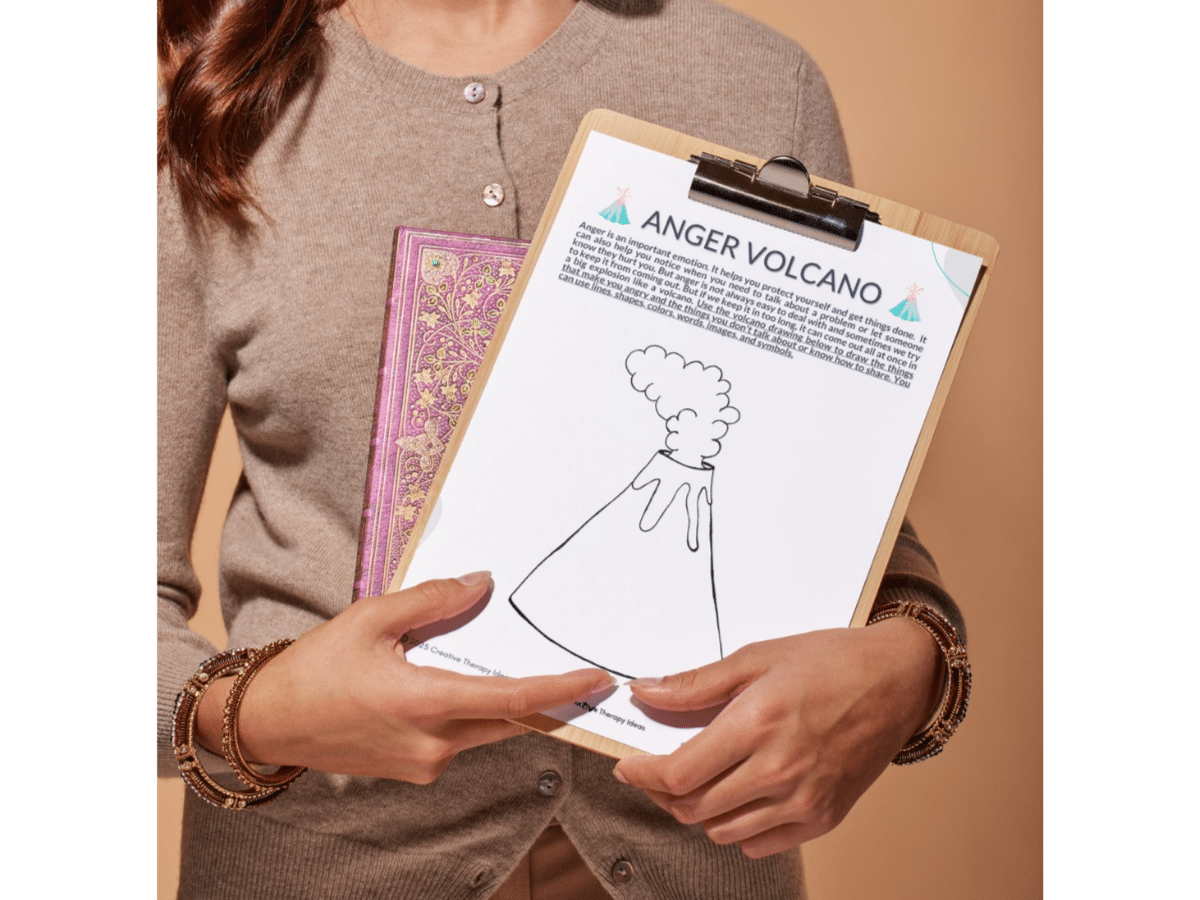
In this activity, children draw:
- What anger feels like/looks like
- Triggers that cause anger to build
- Warning signs their body gives them
- Coping strategies that help release anger safely
This worksheet reinforces that anger in and of itself isn’t negative, but learning how to regulate it is key. It’s especially useful for children who struggle with emotional outbursts, frustration tolerance, or impulse control.
Best for:
✔️ Anger management
✔️ Emotional regulation
✔️ Emotional awareness
You can create this Anger Volcano Drawing Activity on your own, or get the worksheet instantly as part of the Art Therapy for Kids Worksheet Bundle I created, which has 60+ pages of art therapy-informed worksheets for child therapy.
2. Worry Jar Art Therapy Activity
The Worry Jar Art Therapy Activity helps children externalize anxiety and contain their worries in a visual, concrete way.
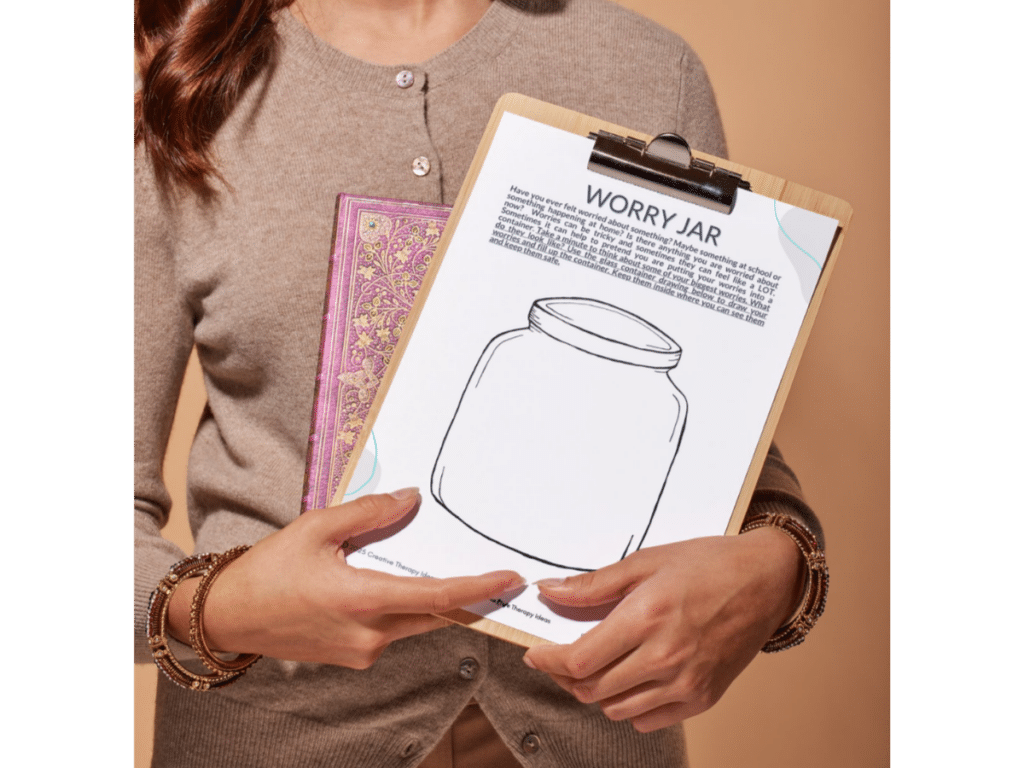
Children are invited to draw:
- Worries they’re holding onto
- How those worries feel in their body
- Ways to cope with or “contain” worry and anxiety
This activity is particularly helpful for kids who experience rumination, nighttime anxiety, or school-related stress. It helps normalize worry while teaching children that they don’t have to hold everything inside.
Best for:
✔️ Anxiety support
✔️ Emotional processing
✔️ Coping skills
You can create this Worry Jar Drawing Activity yourself, or get the worksheet instantly as part of the 60+ page Art Therapy for Kids Worksheet Bundle I created for working with kids.
3. Feelings Faces Drawing Activity
The Feelings Faces Drawing Activity is a useful art therapy activity for kids that supports emotional intelligence by helping children identify and recognize emotions in themselves and others.
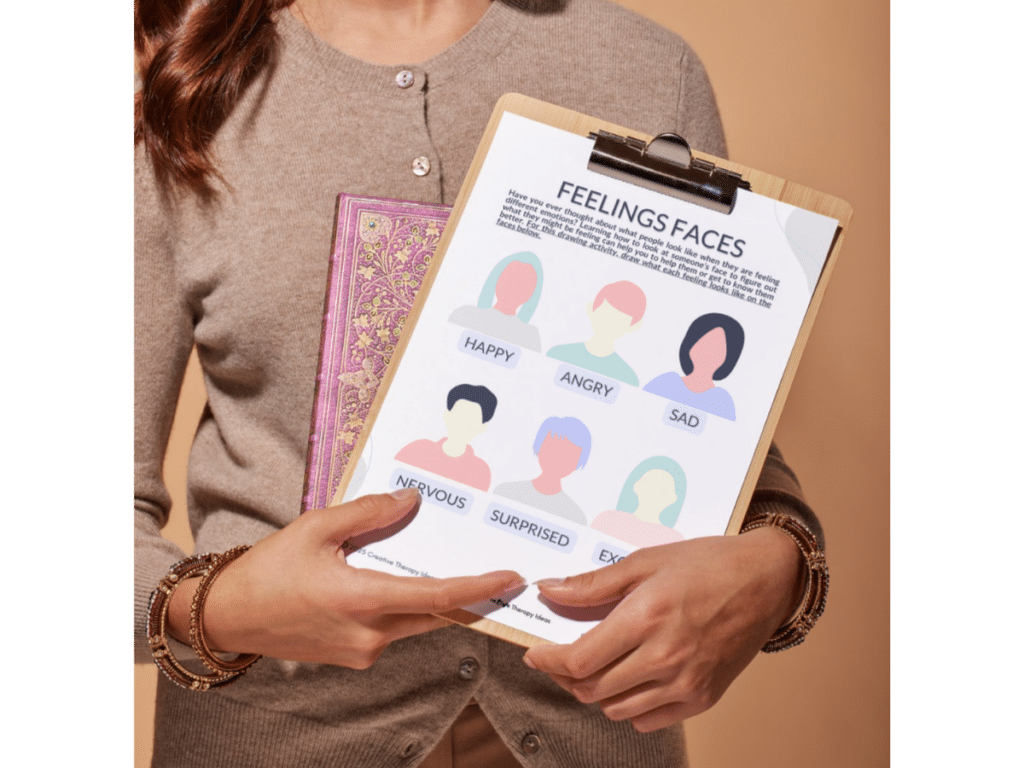
Children explore:
- Facial expressions connected to emotions
- How emotions might look in different situations
- Emotional awareness, emotional expression, and perspective-taking
This activity can be adapted for younger children by using mirrors, storytelling, or role-play, and it works beautifully in both individual and family or group settings.
Best for:
✔️ Emotion identification
✔️ Emotional vocabulary
✔️ Emotional development
You can design your own version of the Feelings Faces Drawing Activity, or get the worksheet instantly as part of the 60+ page Art Therapy for Kids Worksheet Bundle I created for counselors and therapists who provide child therapy.
Using These Art Therapy Activities for Kids
These art therapy activities for kids and their corresponding worksheets are flexible and can be used:
- During individual therapy sessions
- During telehealth sessions
- In school counseling settings
- For family therapy sessions
- As take-home activities for families
It can be helpful to start with lighter prompts (stories, examples, imagination, metaphors) before moving into more personal reflection. This allows children to feel safe and supported as they explore their emotions.
Who Can Use These Art Therapy Worksheets
These activities are ideal for:
- Therapists and counselors
- School-based clinicians
- Social workers
- Family therapists
- Parents and caregivers
- Educators supporting social-emotional learning
While these worksheets are art therapy–informed, non–art therapists can still use them as creative emotional regulation tools without claiming to provide formal art therapy services.
Get the Art Therapy for Kids Worksheet Bundle
All three activities shared here—the Anger Volcano, Worry Jar, and Feelings Faces—are included in the Art Therapy for Kids Worksheet Bundle from Creative Therapy Ideas.
This bundle includes:
- Printable child therapy worksheets
- Emotion regulation tools
- Anxiety and anger support activities
- Easy-to-use, session-ready resources
- Processing questions for therapists and professionals to use in session
👉 Purchase the Art Therapy for Kids Worksheet Bundle from the Creative Therapy Ideas Etsy Shop
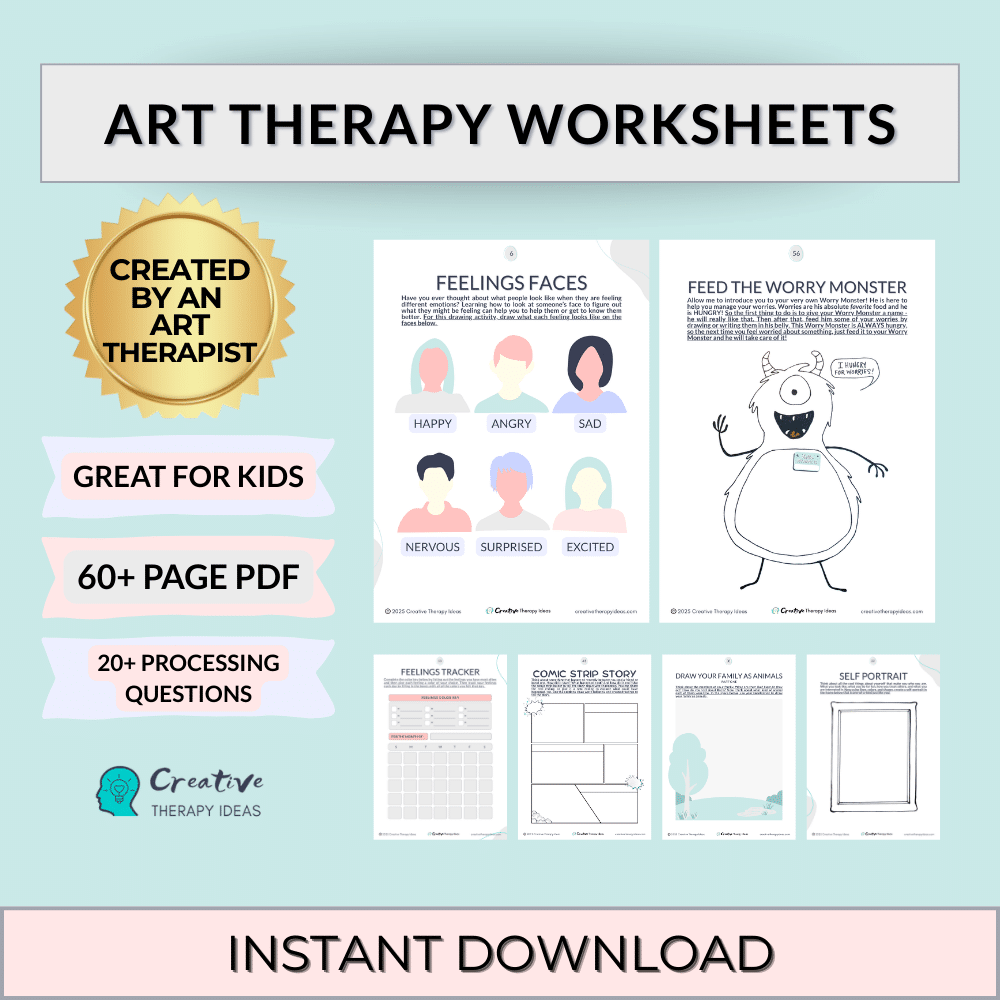
You can all of the worksheets instantly as part of the 60+ page Art Therapy for Kids Worksheet Bundle I created for counselors and therapists who provide child therapy.
If you’re looking for engaging, effective art therapy activities for kids that support emotion regulation and emotional growth, this bundle is designed to make your work easier—and your sessions more impactful.